In part One of Toilet Learning I introduced you to the world of Toilet Learning verses Toilet Training. Here is Part One.
So what happens if your child needs to be toilet trained within a certain time frame? What happens if your child is heading to kindergarten, and you need them toilet trained before they start?
Ideally, children should be toilet trained by the time they attend kindergarten, as kindergartens do not have the resources (staff ability) or facilities to change nappies. However, this isn’t a reason to not be accepted into kindergarten and therefore it is really important that you engage in conversation with the early childhood educator on a plan to best support your child and their needs.
There are many skills involved in the toilet learning/training process.
We need to consider the following (not necessarily in this order):
- Can your child pull his/her pants up and down?
- Can your child get up and down off the toilet?
- Can your child wipe themselves after they have been?
- Can your child read the cues that they need to go?
- Can your child ask to go to the toilet?
- Can your child flush the toilet?
- Can your child wash his/her hands?
So what can we do to help:
Provide many opportunities for the child to feel the sensation of wet/dry. Consider wearing underwear instead of a nappy or if you don’t like cleaning up a mess then placing cheap underwear under a nappy. Buying “cheap” underwear means you can throw them out if your child happens to have an accident and you don’t want to clean it up.
Encourage sitting on the toilet during transition time. For example: As soon as they wake up from sleep/nap time, before getting dressed in the morning, before lunch or even when they have finished playing with a specific activity. Children won’t want to sit on the toilet mid-way through an activity, and they definitely won’t want to be made to go to the toilet every half an hour as this could have an adverse affect. The child may eventually get tired of going to the toilet. However, if you see them jiggling or moving around uncomfortable then a gentle reminder to go to the toilet may be required.
Let them watch you. You could also go to the toilet during transition times too. Say “Look mum is going to go to the toilet now, let’s see if you can go too.”
Read picture story books about going to the toilet. Some examples include: “Liam Goes Poo on the Toilet” by Jane Whelen Banks, “Caillou No More Diapers” by Christine L’Heureux & Pierre Brignaud.
Provide a visual strip on the steps on toileting. This will help with independence and understanding what they need to do. You can check out some ideas for visual strips at Continence Victoria.
Encourage self-dressing outside of toileting. Practise pulling pants up/down when getting dressed in the morning or when getting undressed at the end of the day.
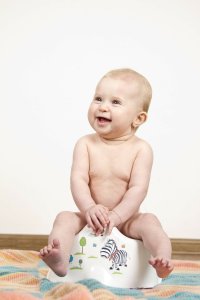
Role model with a doll, use a potty and incorporate it in pretend play. If you don’t have a potty, toy libraries are great for accessing a range of toys such as a pretend potty.
Would you like more ideas that will assist you with toilet train your child?
Let’s connect and chat more.
 The Early Parenting Village, Cheltenham Victoria - all rights reserved