When you think of toilet training, what’s the first thing you think of? What comes to your mind?
Maybe the thought makes you nervous, that it will be challenging or perhaps you should wait until summer or when you don’t have to leave the house.
What if I told you that toilet training shouldn’t be that hard, and that if we change the term “training” to “learning” then we can focus on developing the skill without the pressure or time frame to have your child “trained” at a specific time.
It is important to note, that with any new skills each child learns differently, each family has their own set of rules and expectations, and everyone does things at their own rate. We cannot compare ourselves, as a parent to another parent, just like we cannot compare our child to another child the same age.
We are all individuals, and we all have different needs.
So what is toilet learning?
Toilet learning is about following your child’s lead in the toilet process.
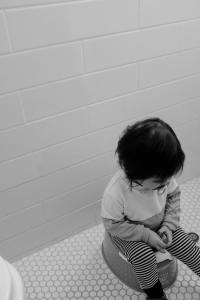
We began our toilet learning journey before our child turned 1, however it was about showing them what happens on the toilet, giving the child an opportunity to use the potty as part of their daily routine and getting excited if we “just happened” to catch that wee or poo.
Of course, as a parent you need to be able to provide your child with the opportunity to lead in the toilet process. That is providing access to a potty or a child seat on the adult toilet, training pants or cheap underwear and an opportunity for accidents to happen. And yes accidents will happen, although I like to call them lessons. When accidents do happen it’s important to keep calm, reassure them and clean it up.
Children as young as 18 months, will start showing an interest in toilet learning, however you can defiantly start earlier by providing cloth nappies and opportunities to sit on a potty as part of the routine, for example: as soon as they wake up from naps, or before bath time etc.
Cloth nappies are great, as children learn about being wet or dry, by feeling the wetness after they have urinated. Unfortunately disposable nappies absorb most of the moist of the urination and children may not notice they are wet. You also save a lot of money by not buying disposable nappies, and some Local Government are providing rebates and subsidies if you are using cloth nappies. (You can find out more at https://clothbaby.com.au/2020/04/30/rebates-available-for-cloth-nappies/)
However, they are not for everyone, the cleaning process can be time consuming and that’s ok.
Have you ever tried to get your 2-2.5 year old on the toilet, and find you end up fighting them?
That they don’t want to sit on the toilet or potty, and they are too busy playing. This age is often tricky, as 2 years old tend to want their own independence and this is when those power struggles begin.
If we introduce the potty before the child turns 2, incorporating it into the daily routine then you, as a parent are laying the foundations prior to the power struggles beginning.
We also need to encourage independence, allowing the child opportunities to undress or dress themselves, remove their pants and even washing hands, with help. We need to give plenty of opportunities throughout the day for children to practise these skills, as this is part of the toilet learning process.
Remember, toilet learning is a natural process, and should be done at the child’s pace. We should never put pressure on the child to sit on the toilet, or make them sit on the toilet/potty for long periods at a time.
We are simple showing, teaching and then following their lead.
In a nutshell:
- Can you use cloth nappies instead of disposables? Cloth nappies helps the child learn the difference between wet and dry, making toilet learning easier.
- Can you incorporate the potty as part of your everyday routine? Incorporating the potty/toilet as part of the routine prior to the child turning 2 makes it easier before the power struggles begin.
- Encourage independence in dressing and hand washing, as these skills are just as important when using the toilet.
Please note: this is only regarding day time toilet learning. Night time toilet learning is different and is another skill that takes longer to learn.
We also need to remember that if your child is developmental delay, then toilet learning will take longer and may require support from an Occupational Therapist or Continence Nurse.
Do you have a question or want to explore more on toilet learning?
Then let’s chat more.
 The Early Parenting Village, Cheltenham Victoria - all rights reserved
One thought on “Toilet Learning Part 1”